In northern Italy, in the town of Como, long celebrated for its silk, Paolo Albizzati began in the early 1960s crafting ties by hand for prominent Milanese brands from a modest basement workshop in his family home. Como had long supplied silk to the ateliers and fashion houses of Milan and Paris, shaping the Lombardy’s tradition of textile craftsmanship.
In 1975, the “Alby” factory was formally established in Malnate, in the province of Varese, guided by a clear principle: to create pieces that reflect the highest standards of Italian silk accessories.
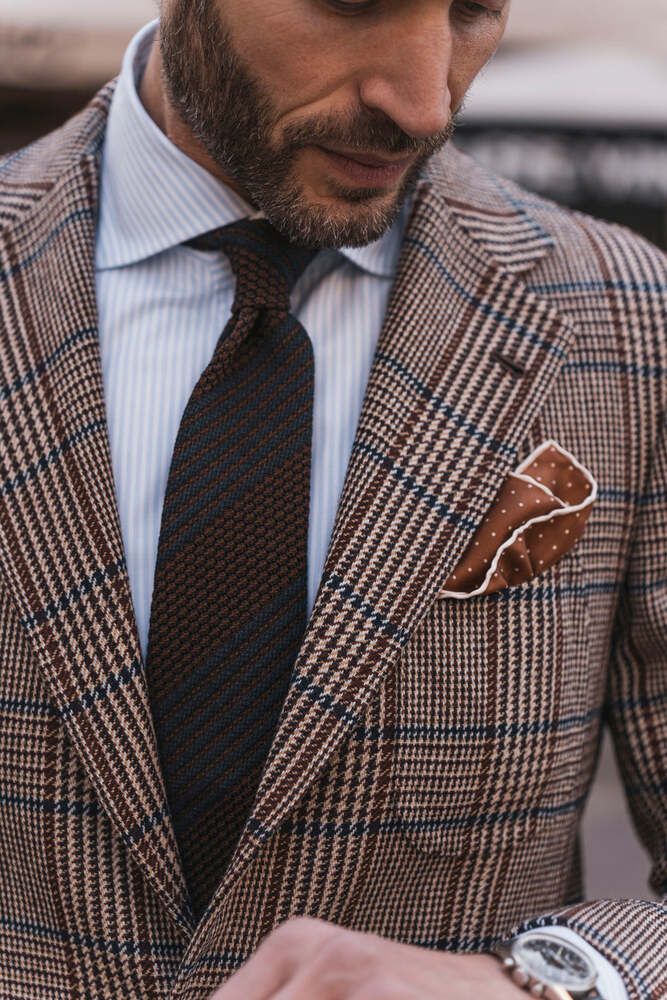
Working closely with the historic silk mills of the Como district, the house selects fabrics distinguished by their depth of colour, purity of texture, and exceptional quality. Many of these mills trace their origins to the early nineteenth century and remain central to Italy’s silk production. To this day, these silks form the foundation of every Albizzati creation, lending each piece a restrained elegance designed to integrate naturally within a man’s wardrobe.
Production remains rooted in traditional methods. Ties and pocket squares are cut, folded, and finished by hand, preserving the small irregularities that reveal the work of the artisan. The shaping of the blade, the balance of the interlining, and the hand-rolling of silk edges reflect a disciplined approach grounded in Italian sartorial tradition.
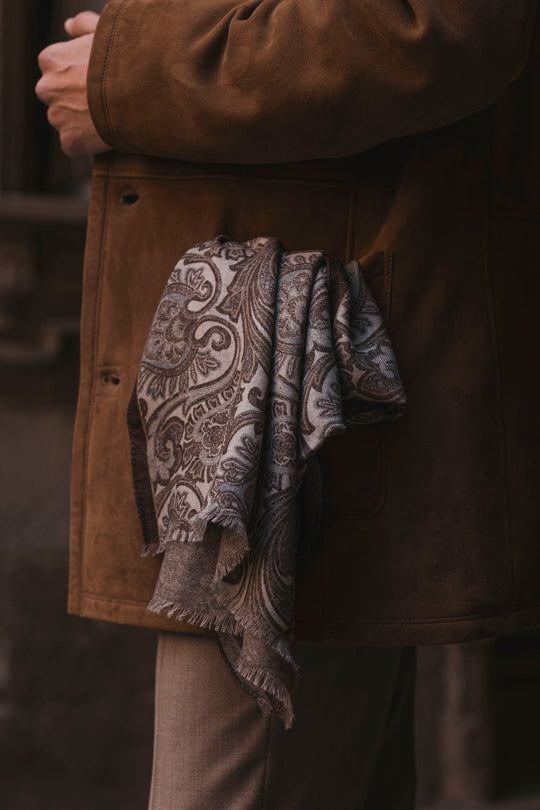
Alongside its silk work, Albizzati maintains a considered knitwear and scarf programs. Produced in Italy from selected natural fibres—including cashmere, wool, silk, cotton, and linen—these garments apply the same attention to material, proportion, and finish found in the house’s silk accessories. The collection extends the Albizzati philosophy beyond ties and pocket squares, offering knitwear and scarves designed to integrate naturally within a gentleman’s wardrobe.

Today, the house remains family-owned, led by Paolo Albizzati’s son, Fabio. Guided by the values established by its founder, the company continues to work within the traditions of the northern Italian textile district, ensuring that each piece reflects both the heritage of Lombardy’s silk and the discipline of Italian craftsmanship.